The Science Delusion (Science Set Free)
Challenges ten dogmas of mainstream science including the assumption that consciousness is nothing but brain activity.
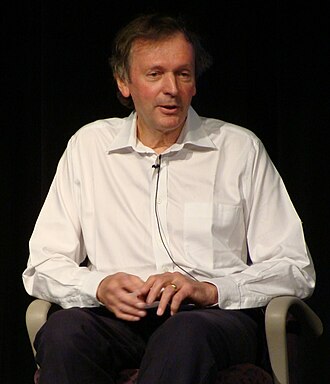
Photo: Zereshk · CC BY 3.0 · Image source and license ↗
Researcher profile
Biologist & Parapsychology Researcher · Perrott-Warrick Fund / Independent
Cambridge biologist who proposed morphic resonance and conducted the most rigorous controlled experiments on telephone telepathy and the sense of being stared at in the published literature.
Cambridge biologist who proposed morphic resonance and conducted the most rigorous controlled experiments on telephone telepathy and the sense of being stared at in the published literature.
Double-blind randomized trials · Pre-specified protocols · Video monitoring · Telephone telepathy paradigm with randomized caller selection
Critics argue that his telepathy and staring experiments allow methodological flaws — including inadequate blinding and sensory leakage — that could explain results without psi. Independent laboratories have not consistently replicated his findings. His morphic resonance theory is considered unfalsifiable by most mainstream biologists.
This summarizes the researcher's work. It is not a finding that any theory of consciousness or survival has been proven.
Sheldrake holds a PhD from Cambridge and was a Research Fellow of Clare College before proposing morphic resonance in 1981 — the idea that nature has a kind of memory, with forms and behaviors shaped by cumulative habits rather than fixed physical laws. The book was famously called "the best candidate for burning" by Nature editor John Maddox. Sheldrake subsequently focused on more testable psi claims: in 4,000+ telephone telepathy trials, subjects identified the correct caller (from four options) at rates significantly above 25% chance. His staring experiments and research on dogs anticipating owners' return (monitored by continuous video) added to a body of controlled work that is peer-reviewed but outside mainstream acceptance.
Challenges ten dogmas of mainstream science including the assumption that consciousness is nothing but brain activity.
Use these sources to check background, methods, and publication details. Some older works have no verified online destination.
If a source has moved, a portrait is outdated, or profile information needs correction, please tell us which item to review.
Report a correction ↗